Shingles
missing, damaged or displaced material and the condition of the surrounding covering.

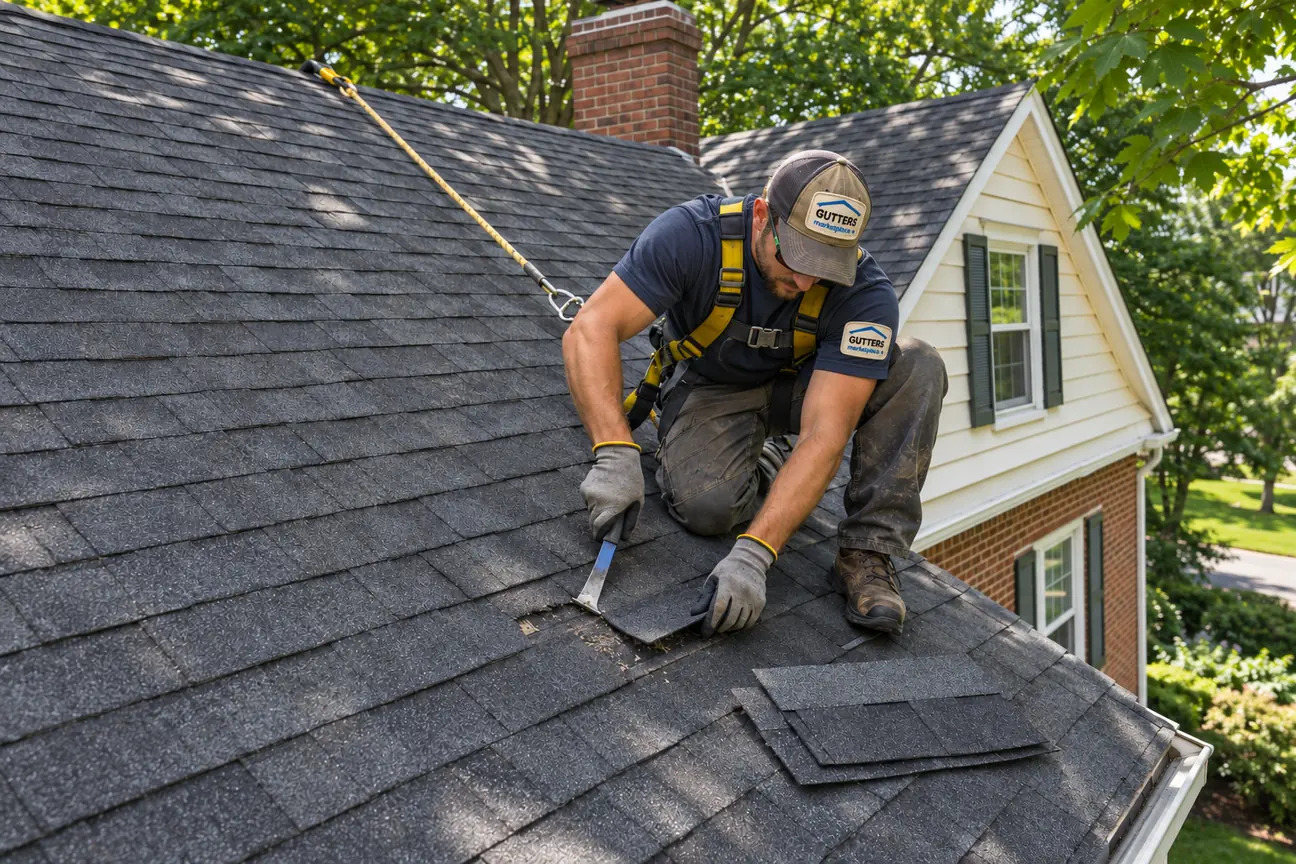
PENNSYLVANIA · ROOF REPAIR
We repair roofs, including leaks and localized damage. If you’ve noticed a ceiling stain or a roof leak in Sinking Spring, Reading, or elsewhere in Berks County, start by finding where water enters. A ceiling stain marks where water became visible, but may not identify its entry point. An assessment should connect the symptoms to the affected shingles, flashing, penetration or metal roof component, then explain whether a localized repair is suitable.
AI-generated service illustration
A clear starting point
Note when the problem appears, which rooms are affected and whether it follows rain, wind-driven rain or melting snow. Existing photographs, prior repair records and the approximate roof history can help an assessor understand the pattern. Describe what you observed without assuming that the visible stain sits directly below the entry point.
If the concern is limited to exterior staining or buildup, a roof cleaning assessment can help define a maintenance scope. Water entry, missing roofing or damaged flashing calls for a closer look at the affected assembly before cleaning is considered.
missing, damaged or displaced material and the condition of the surrounding covering.
valleys, walls, chimneys and the details around roof penetrations.
deterioration or damage where the roof covering meets an opening.
panel damage, flashing and system-specific attachment or sealing details.
Water near an eave may involve roofing, fascia or a gutter that overflows. Interior moisture can also need investigation for condensation or another building-system issue. The scope should distinguish the diagnosed roofing work from related gutter, ventilation or building repairs. Repairing flashing around a chimney does not automatically include chimney masonry work.
A repair may be practical when the defect is localized and the surrounding materials can support a compatible solution. Widespread deterioration, multiple recurring problems or an unsuitable existing assembly may call for a broader assessment. Neither the presence of a leak nor the roof's age, by itself, establishes the full scope.
A useful repair proposal identifies the evidence, the component being addressed and any limits to the assessment. Photos should show the relevant conditions. Material choices, access, concealed damage and any further investigation should be explained before work begins.
If replacement needs consideration, compare the preparation and scope for asphalt shingle roofing or metal roofing. These pages describe different systems rather than treating every replacement as the same job.
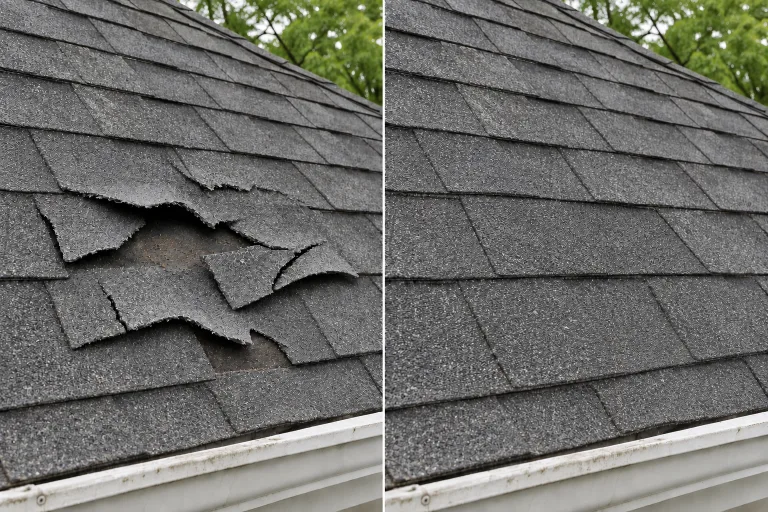
When damage is limited to a few shingles, a targeted repair may be possible. An inspection checks the surrounding shingles and the layers underneath to see how far the damage extends.
In the example, compatible replacement shingles lie flat along the existing rows. The new shingles may look slightly different from the weathered ones around them.
For a roof leak repair, ask for a written summary of the suspected entry point, the evidence and the proposed work. For roof flashing repair, identify the affected transition and which adjoining materials must be lifted, replaced or protected. Separate visible damage from conditions that still need investigation.
At completion, ask for photos of the repaired area and a list of the components addressed. Agree on what to report if moisture returns, including the timing and weather conditions. Recording a new stain or drip helps the next assessment compare it with the original problem.
Project scope
Use these points to organize the information and questions for a written proposal.
Common questions
Practical considerations for roof repairs and leak diagnosis.
A photograph can document a symptom or visible defect, but it may not establish the full water-entry path. An on-site assessment and, in some cases, additional investigation may be needed.
No. Repair materials and methods should suit the affected component and roofing system. Adding sealant without establishing the cause may leave the underlying problem unresolved.
It should name the suspected or confirmed cause, the work proposed, relevant exclusions and how unexpected damage will be handled. Ask how completion will be documented and what written terms apply to the specific repair.
The price depends on access, the source and extent of water entry, compatible materials and whether the affected components need to be opened up. Ask for separate descriptions of diagnosis, the proposed repair and any additional work that could be needed if concealed damage is found.
The inspection should distinguish failed roof flashing from a problem with the chimney or another nearby roof detail. If the flashing is the source, the scope should identify which pieces and adjoining roofing must be repaired. If another trade is needed, the estimate should make that clear.
Document any fresh moisture or change in the stain and note when it appeared. Ask the contractor to recheck the repaired area and other possible sources, including nearby roof details and nonroof sources where appropriate. A recurring symptom calls for reassessment of the entry point.
Pennsylvania contact
Send your contact details, or call or text us to discuss your roof.
We use optional analytics to understand how people find and use our roofing website.